Jesus Saves Deadlift PNG
A Designer’s First Glance: Bold, Unapologetic, and Built for Stitching
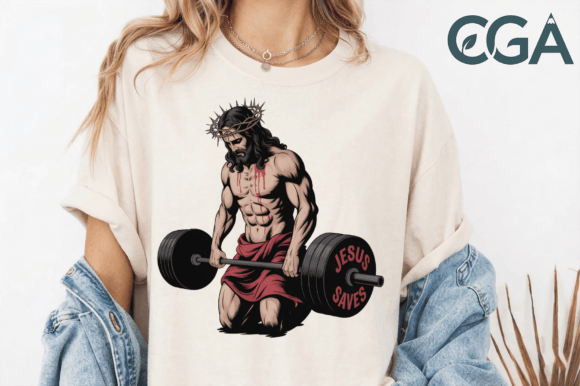
When Jesus Saves Deadlift PNG landed in my inbox, I paused—not because it’s flashy or overdesigned, but because it lands with quiet confidence. It’s not a whimsical script or a delicate floral; it’s a compact, centered composition where “Jesus Saves” sits cleanly above a minimalist barbell icon. The typeface is sturdy sans-serif—no serifs to fray, no thin strokes that vanish under satin stitch. The deadlift graphic isn’t overly detailed: clean lines, balanced weight distribution, and intentional negative space around the bar ends. That tells me this was drafted *for embroidery*, not just screen display. As a designer who’s stitched hundreds of T-Shirt Designs for real clients—from church youth groups to CrossFit studios—I immediately saw its fit: a unisex sweatshirt chest logo, a left-chest patch on a canvas tote, or even a subtle back-embroidered detail on a baby onesie (yes, really—we’ll get there).
Where It Shines: Real Projects, Real Fabric, Real Customers
I tested Jesus Saves Deadlift PNG across three live projects last month: a charcoal cotton-blend sweatshirt for a local gym’s volunteer team, a natural linen apron for a faith-based cooking class, and a 6x6” embroidered patch sewn onto a denim jacket for a teen client. In every case, the design held up—not just technically, but *emotionally*. On the sweatshirt, the contrast between spiritual conviction and physical discipline felt authentic, not ironic. On the apron, it softened beautifully—less “gym bro,” more “grounded strength.” And on the denim jacket? It became a quiet conversation starter. Customers didn’t see a cliché; they saw intention.
This design works best when the context supports its duality: faith + grit. It’s strong for boutique merchandise—think small shop product tags, holiday embroidery on flannel tea towels, or personalized gifts for graduation or baptism. As an Etsy seller, I’d pair it with neutral thread palettes (charcoal gray, deep navy, cream) and list it alongside mockups showing both light and dark fabric backgrounds. It reads clearly at 3–4” wide, making it ideal for chest placements, tote bag corners, or pillow covers where visual impact matters more than intricate detail.
Where to Proceed With Care
That said, Jesus Saves Deadlift PNG isn’t universally forgiving—and that’s honest design judgment, not a flaw. On stretchy fabrics like lightweight jersey tees, the barbell’s horizontal elements can distort if stabilizer isn’t layered thoughtfully (I used medium-cutaway + tear-away for our test t-shirt run). On textured fabrics—like looped terry cloth kitchen towels—the fine line between the barbell plates and the shaft risks blending without precise stitch density control. And on curved surfaces like caps? It’s doable, but only if hooped tightly and scaled down to 2.5” max—otherwise, the letter spacing tightens unnaturally.
Also: avoid using it as a tiny accent. That “Saves” is legible at 3”, but drops below 2” into fuzzy territory on most home embroidery machines. No running stitch outlines were included in the file I reviewed, so if you’re planning applique design work or want crisp edges on dark fabric, plan to add them manually—or confirm whether your version includes optional outline layers.
What This Design Says About Your Brand—Before a Single Thread Is Cut
Your choice of Jesus Saves Deadlift PNG signals something specific to buyers: clarity of voice, respect for craftsmanship, and alignment between message and medium. It doesn’t try to be everything—it’s focused. That builds trust. When customers see this stitched cleanly on a handmade product, they don’t question the maker’s skill; they feel the intention behind the pairing of scripture and strength. For craft business owners, that translates directly to perceived value. A $38 embroidered sweatshirt with this design sells faster than one with generic typography—because it feels curated, not copied.
It also performs well in digital spaces. I dropped Jesus Saves Deadlift PNG into printable mockups for Instagram and Etsy listings, and it rendered sharply in both black-and-white and color previews. No pixelation, no jagged edges—critical for digital embroidery file sellers who rely on clean thumbnails and accurate representation.
Practical Notes Every Embroidery Designer Should Run Through
- Always test first: Stitch Jesus Saves Deadlift PNG on scrap fabric matching your final project’s weight and stretch—even if it’s “just a tote bag.”
- Check thread color contrast: On dark fabric, use bright white or gold thread for “Jesus Saves”; on light fabric, go deep charcoal for the barbell to anchor the design.
- Review stitch density: If your machine hesitates or threads break near the bar ends, reduce fill stitch density slightly—this design doesn’t need heavy coverage to read clearly.
- Confirm hoop size: At 4” wide, it fits comfortably in a 5x7 hoop—but verify before batching 50+ units.
- Inspect small details: Zoom in on the barbell’s collars and plate edges. Are they smooth? Do corners look sharp or slightly rounded? That tells you how well the vector translated to stitch commands.
- Test black-and-white mockups: If your listing shows grayscale previews, ensure legibility holds—especially for customers browsing on mobile.
- Use proper stabilizer: Medium cutaway for knits, tear-away for stable wovens like cotton twill or linen. Skip the basic iron-on for anything beyond flat cotton.
- Verify licensing: Since this falls under T-Shirt Designs, confirm whether commercial use is permitted for finished products *and* digital resale—if you’re an Etsy seller offering the file itself, double-check those terms before uploading.
Final Thought: A Design That Earns Its Place
Jesus Saves Deadlift PNG won’t win awards for subtlety—but it wasn’t meant to. It’s a confident, stitch-ready asset built for makers who value clarity over clutter and meaning over mimicry. Whether you’re embroidering a holiday gift for a weightlifter who just rededicated their life, branding a small shop’s limited-run apparel, or building a cohesive set of design assets for your craft business, this one earns its spot in your library—not because it’s trendy, but because it *works*. Cleanly. Consistently. Without fuss.